Update from the Belgian Pilot: Productive Sampling Day in Offshore Waters
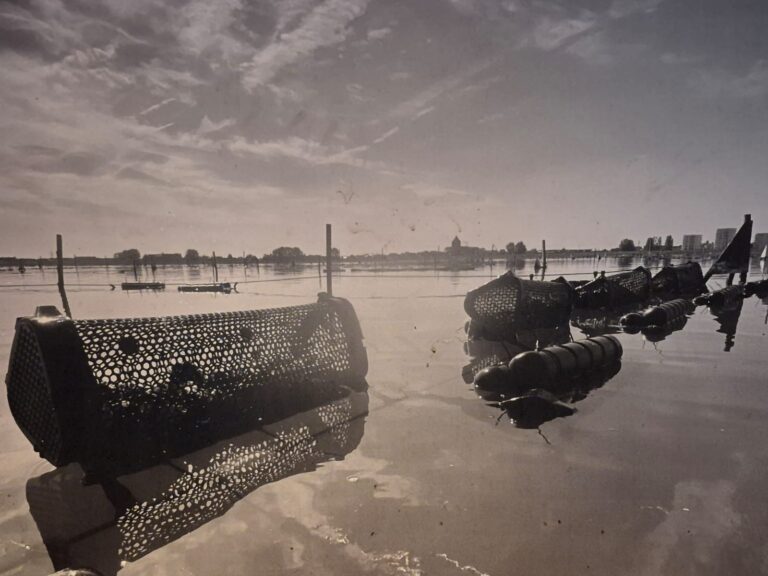
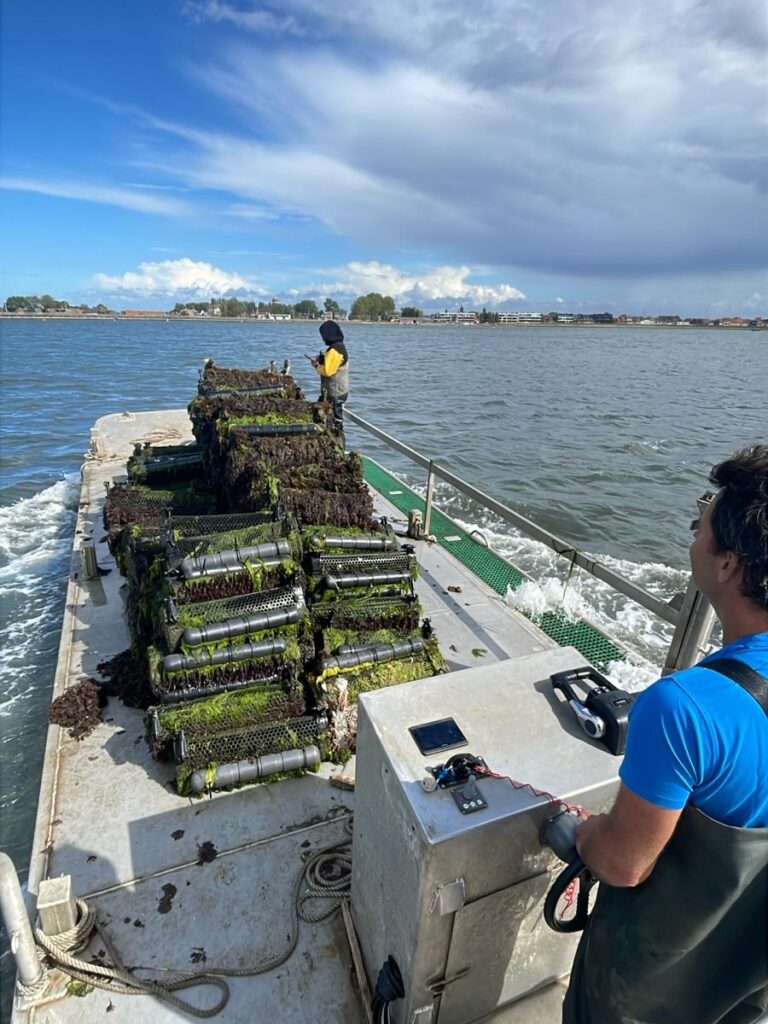
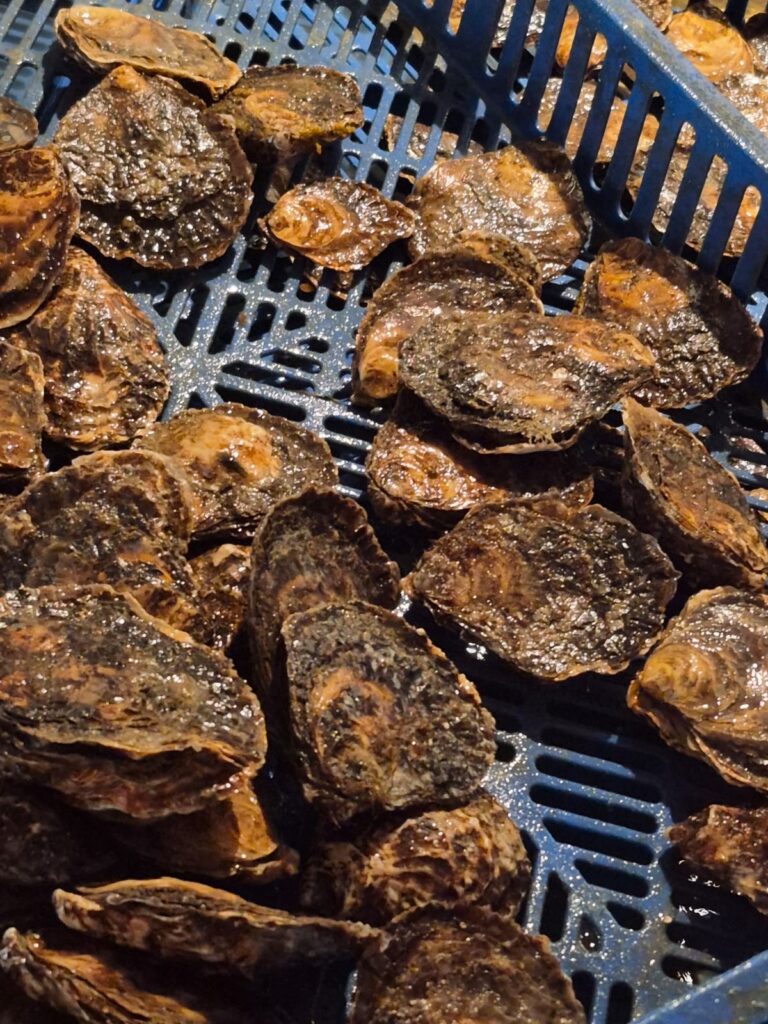
Together with partners from iN-aquacultuur at De Oesterput, the Belwind site recently carried out a sampling day in offshore waters, comparing oysters cultivated in the innovative FlipFarm system with those from a conventional culture system. The work is part of ongoing field activities aimed at better understanding how different farming approaches perform under real offshore conditions. The focus is on evaluating key parameters such as biofouling, oyster performance, and the practical ergonomics of farming operations. which are essential factors when assessing the overall feasibility and scalability of offshore aquaculture systems.
Early observations from the field are encouraging. The FlipFarm system appears to offer advantages in terms of easier and more efficient handling, reduced fouling (the accumulation of unwanted organisms), and improved working conditions for farmers. These operational benefits are particularly relevant in offshore environments, where efficiency, safety, and weather constraints play a major role in daily operations.
At the same time, the biological performance of the oysters remains under detailed investigation. It is still being analysed whether the observed operational advantages also translate into improved growth performance compared to the conventional system, through ongoing growth parameter measurements.
Overall, it was another valuable day in the field, highlighting the importance of combining innovation with hands-on research. We look forward to the upcoming project results and the insights they will provide into the future of sustainable offshore aquaculture!