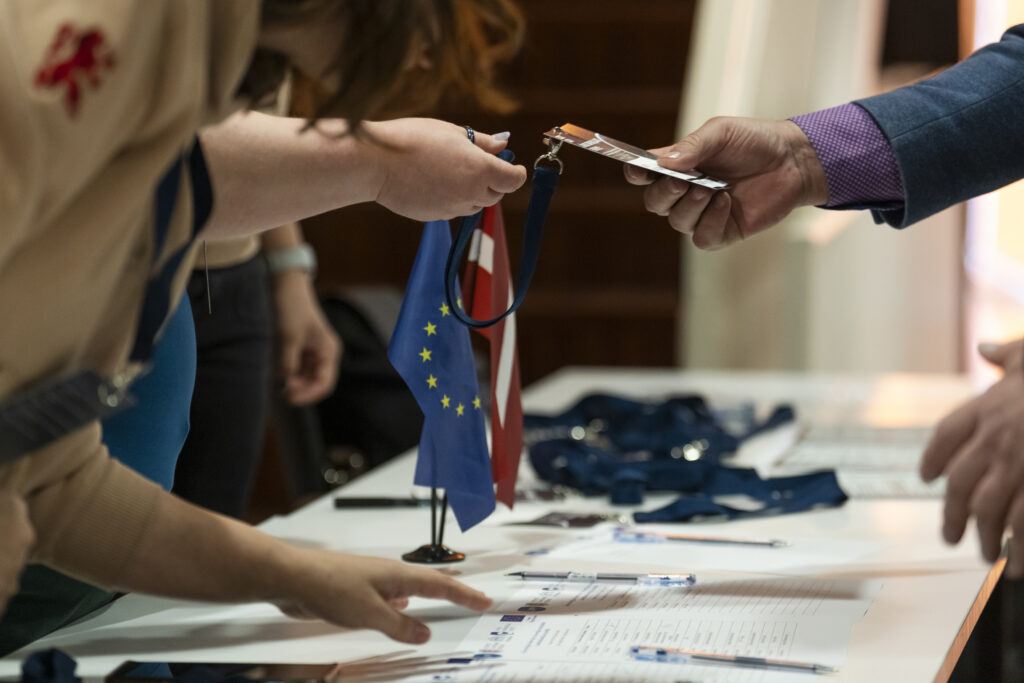
On 16 April 2026, the international Marine Synergy Forum: Sea, Wind Energy and Aquaculture in Multifunctional Marine Development took place in Liepāja, Latvia, at the concert hall Great Amber. The event brought together more than 70 participants from across the Baltic Sea region, including policymakers, researchers, entrepreneurs, and industry experts, to discuss pathways toward sustainable blue economy development
Exploring Synergies in the Baltic Blue Economy
The forum focused on how renewable energy development, particularly offshore wind, can progress in parallel with ecosystem protection and sustainable aquaculture. Discussions centered on practical solutions for multifunctional marine spatial development, highlighting how marine resources can be used more efficiently while reducing environmental impact and creating new economic opportunities for coastal regions.

From Costal Heritage to Multifunctional Futures
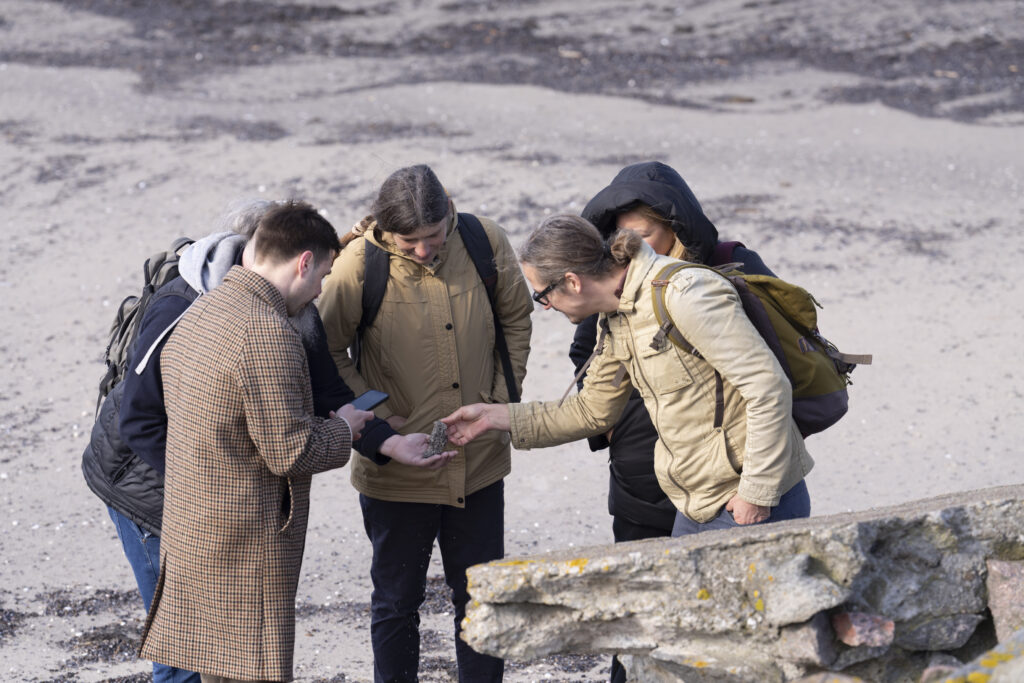
The day began at the Port of Liepāja, where participants gained insight into the daily lives of coastal fishers and visited the former fishing collective “Boļševiks”. This visit illustrated how coastal areas can evolve from traditional fisheries into multifunctional marine environments where economic activity, community initiatives, and tourism coexist, a theme that resonated strongly throughout the forum.
Science, Innovation, and Integrated Marine Use
The forum was opened by the Chairman of the Liepāja City Council, Gunārs Ansiņš, who highlighted the importance of the sea and coastal zones for regional development and future economic resilience. Opening remarks were followed by contributions from RTU Liepāja Academy, emphasizing the role of science and innovation in shaping a sustainable blue economy.
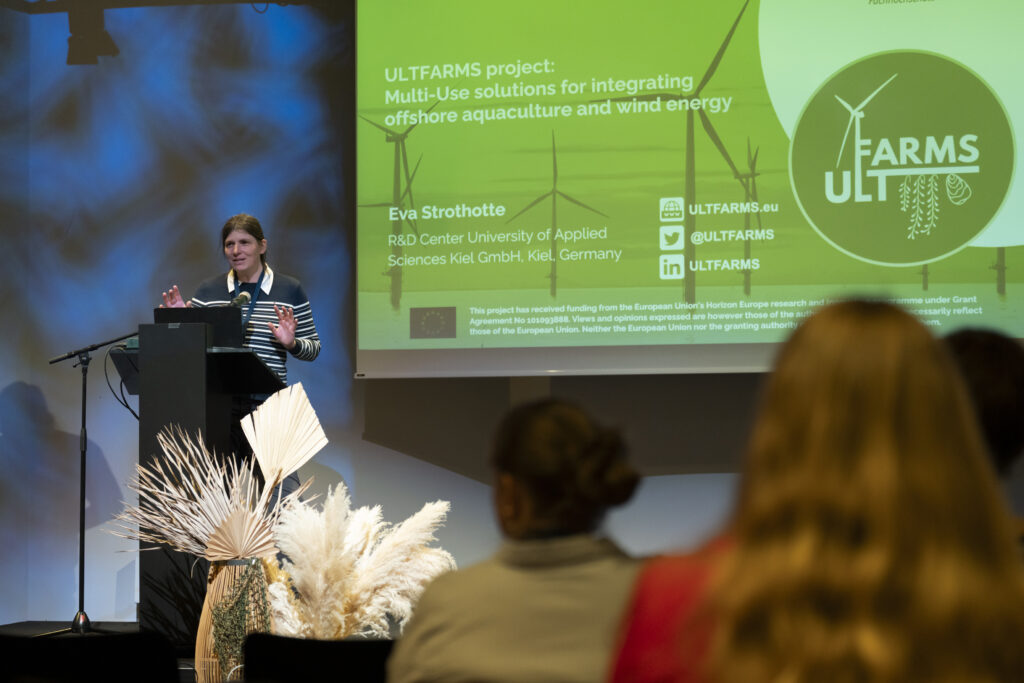
Among the expert presentations, Eva Strothotte (F&E GmbH) presented how ULTFARMS is developing multi‑use solutions that integrate offshore aquaculture with wind energy infrastructure. Her contribution illustrated how mussels, seaweed, and oysters can be cultivated alongside offshore wind farms, supporting smarter use of marine space while contributing to ecosystem services and sustainable food production. The presentation highlighted ULTFARMS as a practical example of how research and innovation can accelerate multifunctional marine development in the Baltic Sea and beyond.
From Research to Practice
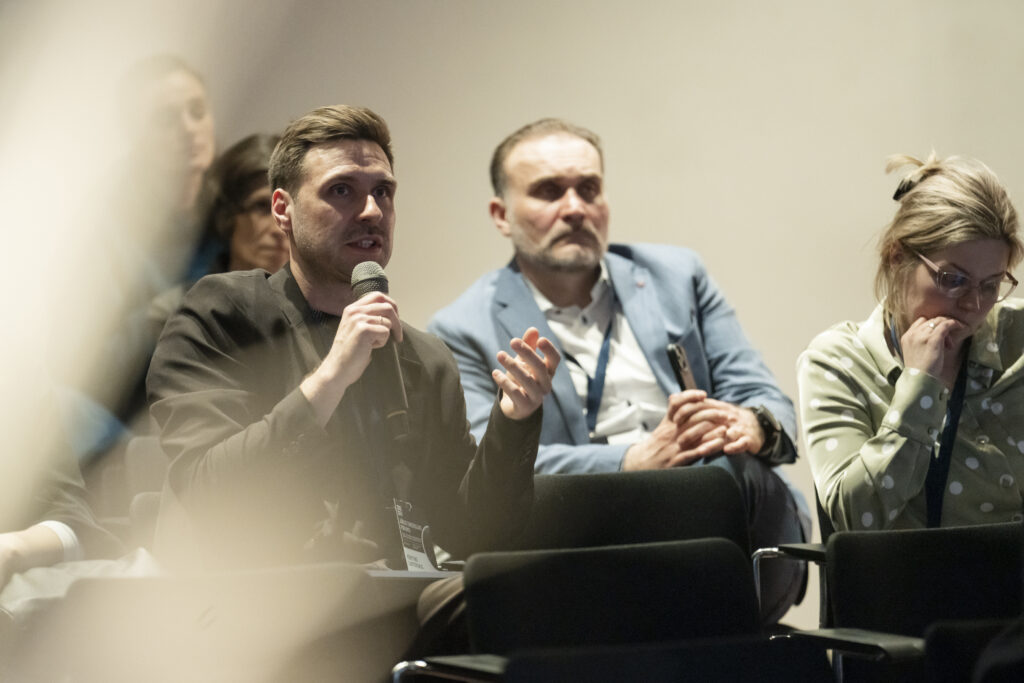
Further presentations addressed topics in sustainable marine spatial development, including shared use of marine space, innovations in algae cultivation, the utilisation of mussel biomass, and bioeconomy development. Experts from across the Baltic Sea region, representing RTU Liepāja Academy, the Latvian Institute of Aquatic Ecology, the Kurzeme Planning Region, and the Investment and Development Agency of Latvia, shared applied research results and real‑world examples.
International project experiences complemented these contributions, showcasing how integrated marine solutions are being implemented elsewhere in the region and outlining critical steps for aligning environmental protection, economic viability and cross-sector cooperation.
Key Conclusions from the Forum
Several clear messages emerged from the discussions:
- Marine macroalgae and mussel cultivation offer strong potential as foundations for sustainable business models, with applications in biotechnology, biomaterials, cosmetics, and energy, while also supporting environmental quality.
- Integrated use of marine space, combining offshore wind energy, aquaculture, and ecosystem preservation, represents a forward‑looking development pathway for the Baltic Sea.
- Cooperation between countries, science, industry, and public authorities is essential to translate innovation into practical, scalable solutions.
- Latvia’s coastal areas, including ULTFARMS Associated Region SymbioSea Baltic, hold significant potential for offshore wind development and sustainable marine infrastructure. SymbioSea Baltic specifically explores environmental suitability, Natura 2000 considerations, governance gaps, and the long-term viability of nature-inclusive offshore structures. It also aims to build a collaborative regional network of marine users and stakeholders.
Looking Ahead
Insights from the Marine Synergy Forum will inform policymakers and contribute to the further development of the Blue Economy Cluster, a cooperation platform that brings together science, business, the public sector, and society. The cluster aims to foster innovation, strengthen collaboration, and support implementation of sustainable blue economy solutions.
By enabling exchange across sectors and borders, the Marine Synergy Forum reinforced Latvia’s and the broader Baltic Sea region’s position in multifunctional marine development, clearly pointing toward a future built on integration, cooperation, and responsible use of marine resources.
Thank you to Anete Jansone from the Kurzemes plānošanas reģions, for significant contributions to this blog article.
All photographs featured in this blog article were taken by Guna Rubule.
