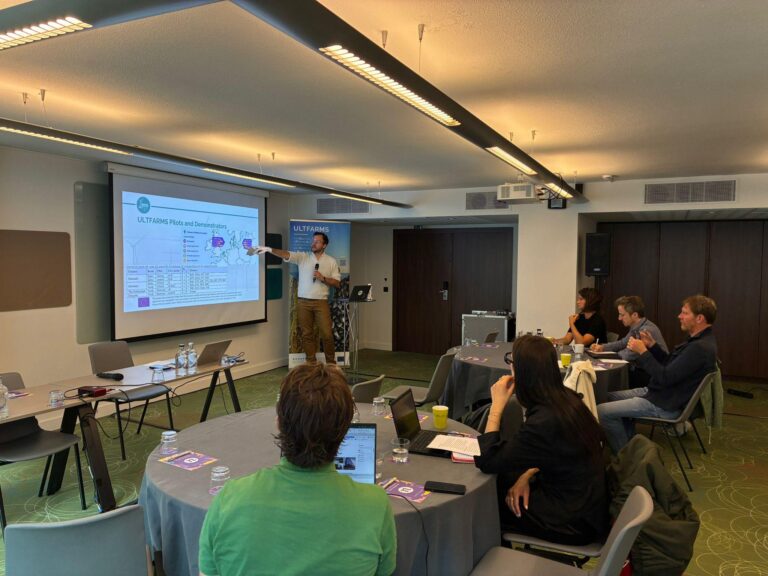
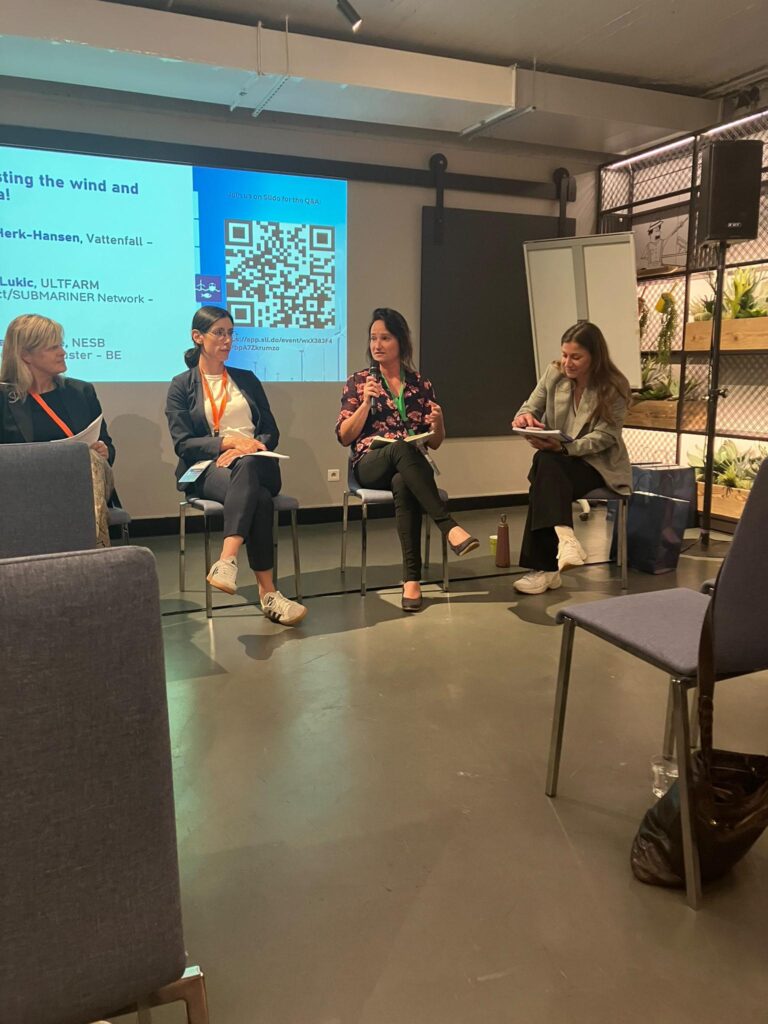
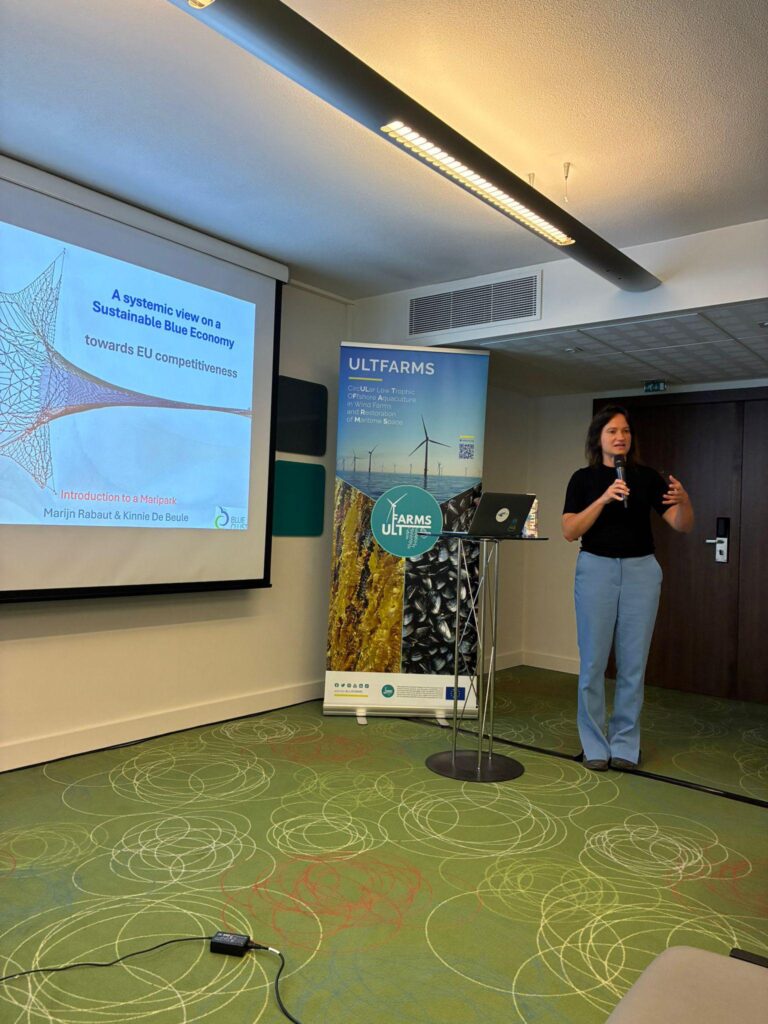
On 5 June, during EU MSP Week in Brussels, the ULTFARMS project hosted a workshop titled “Advancing Multi-Use through MSP: Governance, Gaps and Pathways to Implementation”, bringing together a diverse group of projects and initiatives working on multi-use at sea, including NESBP and the Greater North Sea Basin Initiative (GNSBI).
The session addressed a question that is becoming increasingly urgent: given ambitious offshore wind targets and growing competition for marine space, the question is no longer whether multi-use should happen, but when, how, and under what conditions.
Taking Stock of a Decade of Work
Over the past decade, significant EU and national funding has been invested in testing and demonstrating multi-use concepts. With the European Ocean Pact, the Ocean Act, and the revision of the Maritime Spatial Planning Directive (MSPD) all on the horizon, the workshop was a timely opportunity to reflect on what has been learned.
Ten years of pilots, research projects and demonstrations have generated valuable knowledge and increased confidence among many actors. The spatial squeeze created by expanding offshore wind is also motivating industry to explore new forms of co-existence and collaboration in ways that earlier voluntary pilots could not.
Several important reflections emerged across the session:
- Aquaculture remains the missing piece. While offshore wind continues to expand, sustainable offshore aquaculture still faces major economic barriers. Co-location within offshore wind farms remains one of the most promising pathways for scaling offshore aquaculture, but public intervention and targeted incentives will be needed if seafood security is a genuine policy priority.
- Tender design matters. Price criteria continue to dominate offshore wind tenders. If policymakers want to incentivise multi-use where societal and environmental benefits are greatest, tender frameworks need to explicitly reward it.
- Maritime Spatial Planning has a central enabling role. MSP can bring sectors together, identify locations where synergies make sense, and facilitate dialogue on opportunities and trade-offs before conflicts emerge.
- The ecosystem-based approach must remain central. Space efficiency cannot come at the expense of ecosystem health, and environmental objectives must remain a core foundation of future multi-use development.
- Data standardisation is still a significant challenge. As marine digitalisation accelerates and Digital Ocean Twins become more prominent, interoperable and standardised data will be increasingly important for planning and decision-making.
- Trust is built through collaboration. Initiatives such as NESBP demonstrate the value of bringing authorities, researchers, industry and other stakeholders together. Regional platforms such as GNSBI help build confidence and avoid repeating mistakes across countries and sectors.
- New sectors are entering the conversation. Offshore data centres, defence interests and other emerging uses are becoming more relevant and will need to be integrated into future discussions on marine space allocation.
A Key Message for the Future
A strong message from the workshop was that multi-use discussions cannot stop at national borders. Understanding priorities, cumulative effects and collaboration opportunities at sea-basin scale will be increasingly important, and future policy frameworks, including the Ocean Act and MSPD revision, should reflect this.
Ultimately, multi-use represents a broader shift towards a holistic, space-efficient approach to managing our seas. To succeed, it must be embedded across energy, aquaculture, restoration, nature conservation and wider ocean governance, not confined to maritime spatial planning alone.
