In the first week of July, the mussel cultivation unit at the ULTFARMS Samsø pilot site was fully decommissioned, marking the close of an important chapter in the project’s work on combining aquaculture with offshore wind.
A quick recap: why Samsø?
The Samsø South offshore wind farm, operated by Wind Estate, was chosen as one of the ULTFARMS pilot sites to explore whether aquaculture can be successfully integrated into offshore wind areas. Led by DTU, the pilot set out to test the production potential of low trophic aquaculture (LTA) species, in this case mussels, in the challenging conditions of the Baltic Sea basin, and to evaluate the practical and commercial realities of farming inside a working wind farm.
The site brought its own set of challenges from the start: salinity gradients typical of the Baltic, predation from eider ducks, and the regulatory and area-use questions that come with operating in an offshore wind zone. The pilot was also designed to inform Wind Estate’s plans for an expansion licence, giving the multi-use assessment a direct link to future planning decisions.
The cultivation system itself was a net and tube design, chosen because it needs less maintenance and can hold more biomass per unit than traditional long-line systems, making it a good candidate for exposed offshore conditions. After an initial deployment in 2024 and a strengthened, reinforced version deployed in mid-2025 to better withstand heavy spatfall and physical forcing, the unit had been in the water gathering data on mussel growth, spat survival and fouling.
The decommissioning operation
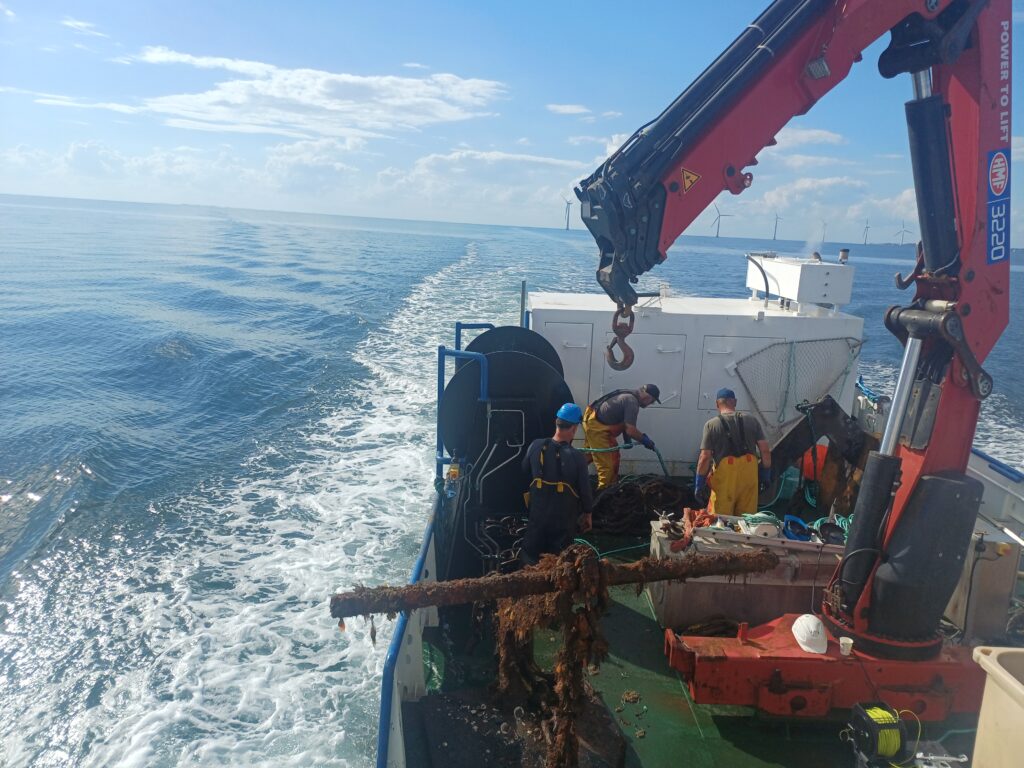
The decommissioning of the Samsø OWF-MU unit was carried out in two phases:
Phase 1: Recovering the tube and net:
The main cultivation structure, the net and tube system that had been growing mussels since its reinforced deployment, was recovered from the water and towed to land.
Phase 2: Recovering anchors and corner markers:
With the main structure safely ashore, the team returned to retrieve the mooring anchors and the corner markers that had defined the extent of the cultivation area.
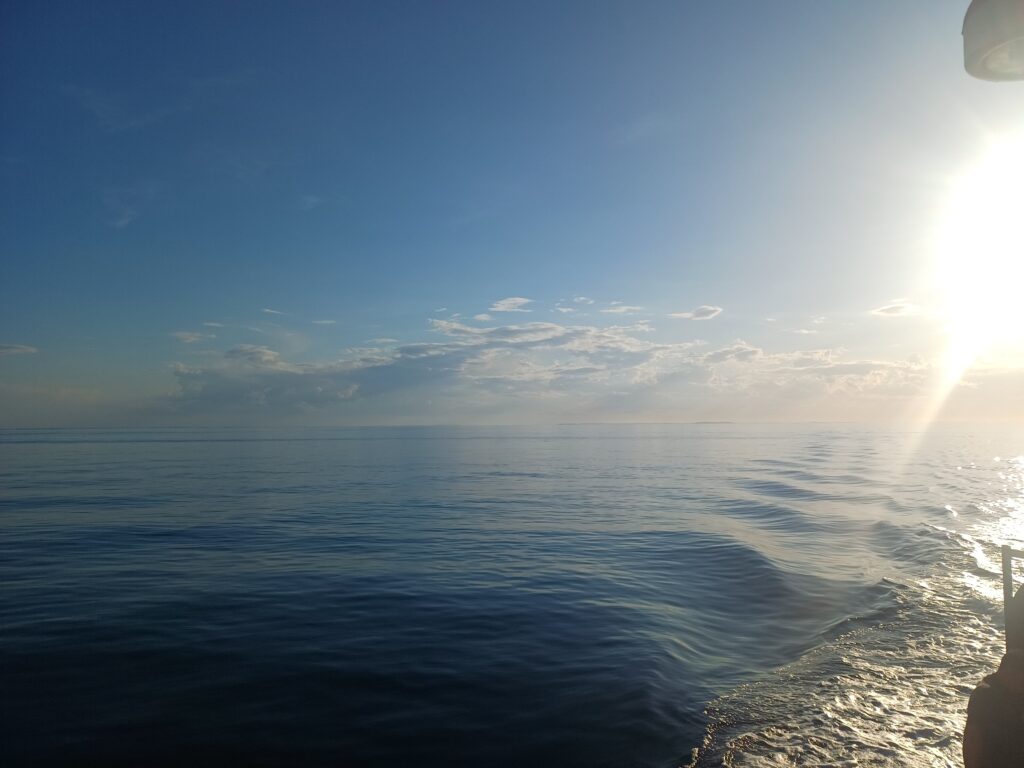
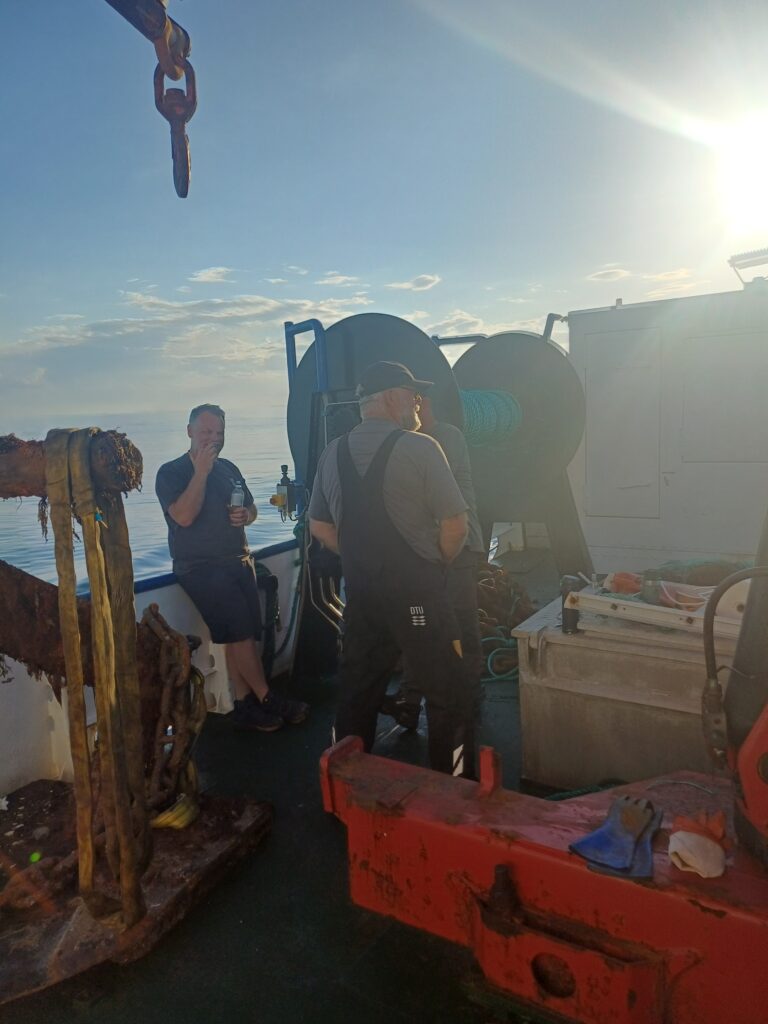
By all accounts, the operation went smoothly. Perfect weather conditions meant both phases could be completed without the delays or complications that offshore work often brings, a welcome end to the pilot’s time on the water.
