ULTFARMS PILOT SITE RESULTS

ULTFARMS ran six Low-Trophic Aquaculture Pilots (LTAPs) at offshore sites across the North and Baltic Seas, co-developed and co-managed by research and industry partners. Below are the results, innovations and technologies tested at each site to advance sustainable seaweed and shellfish farming in offshore wind farms.

ULTFARMS tested offshore seaweed and shellfish farming across six pilot sites in four countries: the Netherlands, Denmark, Germany and Belgium, spanning the North and Baltic Seas. The trials explored mussel and seaweed cultivation, oyster reef restoration, biodiversity monitoring and the resilience of offshore farming systems. Results included 211 kg of sugar kelp harvested over a four-month season at Kiel, winged kelp reaching up to 3 metres in Ireland, and mussels grown at Borssele found safe for consumption. The pilots also tested new technologies for biomass estimation, harmful algal bloom detection and more resilient cultivation. Together, the work delivered four Key Exploitable Results (KERs) with potential for industry adoption.

Denmark: Pilot 1 Samsø

PILOT SITE RESULTS 

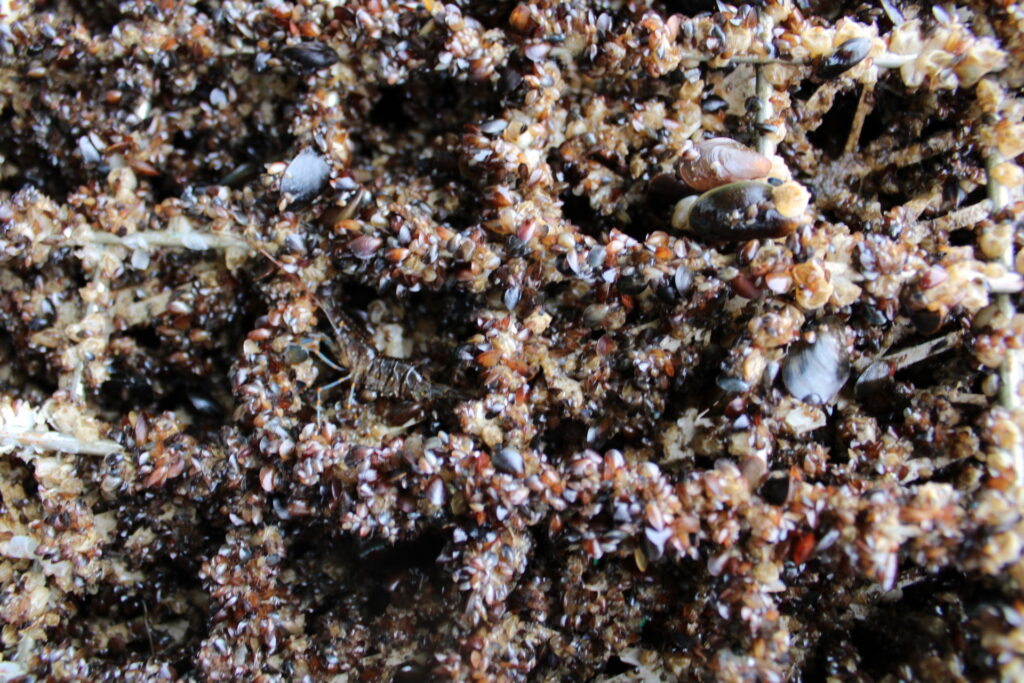
  • Young mussels settled on the farm structures, and the area’s productivity can support mussel growth at commercial levels.
  • The tube-and-net mussel system installed at Samsø by Blå Biomasse was refined and tested inshore in Limfjorden, where it proved to work.
  • Rough conditions and few weather windows limited maintenance and large-scale harvest, so it is not yet possible to say whether offshore mussel farming here is economically viable.
  • The Samsø mussel unit was fully decommissioned in July 2026. DTU Aqua will develop the tube system further and write policy recommendations with the OLAMUR project.

Denmark: Pilot 2 Anholt

PILOT SITE RESULTS 

  • Young mussels settled on the farm structures, and the area’s productivity can support mussel growth at commercial levels.
  • Sugar kelp and dulse both grew successfully at Anholt across a full season, though yields, particularly for sugar kelp, fell short of near-shore comparisons and of commercially relevant volumes, most likely due to physical stress and variable salinity.
  • Few weather windows and limited boat access led to system failures with commercial-scale structures, so biodiversity monitoring on the farm structures could not be completed as planned.
  • DTU Aqua will take the lessons forward in farming techniques and seaweed grow-out, and write policy recommendations with the OLAMUR project. 


DTU Aqua offers partnership opportunities and expertise for anyone who wants to develop the sector. Get in touch for technical support, sector development or further innovation.


Germany: Pilot 3 FINO3 – North Sea

PILOT SITE RESULTS 

  • Sugar kelp (Saccharina latissima) grew well in the North Sea, and a phycoprobe on the FINO3 monopile now sends real-time data on harmful algae for shellfish producers.
  • This phycoprobe is ULTFARMS’ offshore Harmful Algal Bloom sensor, FluoroProbe, one of the project’s four Key Exploitable Results.
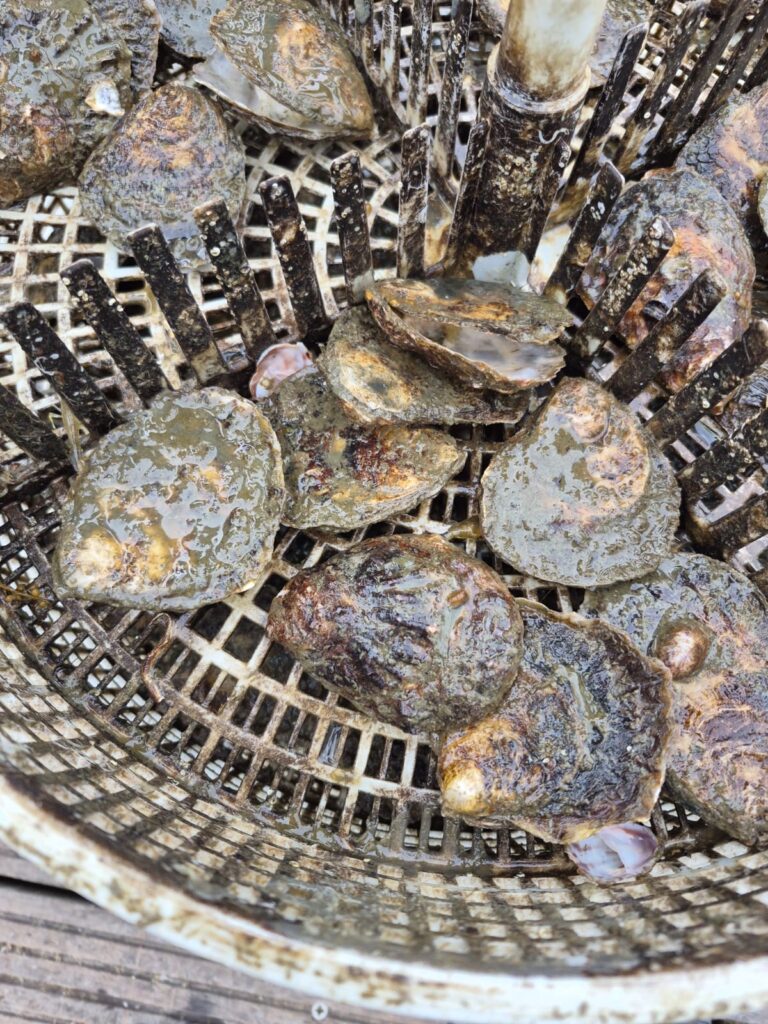
  • Flat oyster restoration worked very well with no maintenance needed, thanks to a mechanical antifouling system and an acoustic release system, and mussels grown offshore tested safe for consumption.
  • Weather windows and limited ship availability remain a challenge, so diver-free retrieval by acoustic release is valuable where divers are no longer allowed in wind parks.
  • Results feed a German expert study on offshore multi-use, and companies are building them into their business cases.

Germany: Pilot 4 FINO2 – Baltic Sea

PILOT SITE RESULTS 

  • For the first time, Ulva (sea lettuce) was cultivated offshore in the Baltic Sea, with partners including the University of Gothenburg and Nordic Sea Farm.
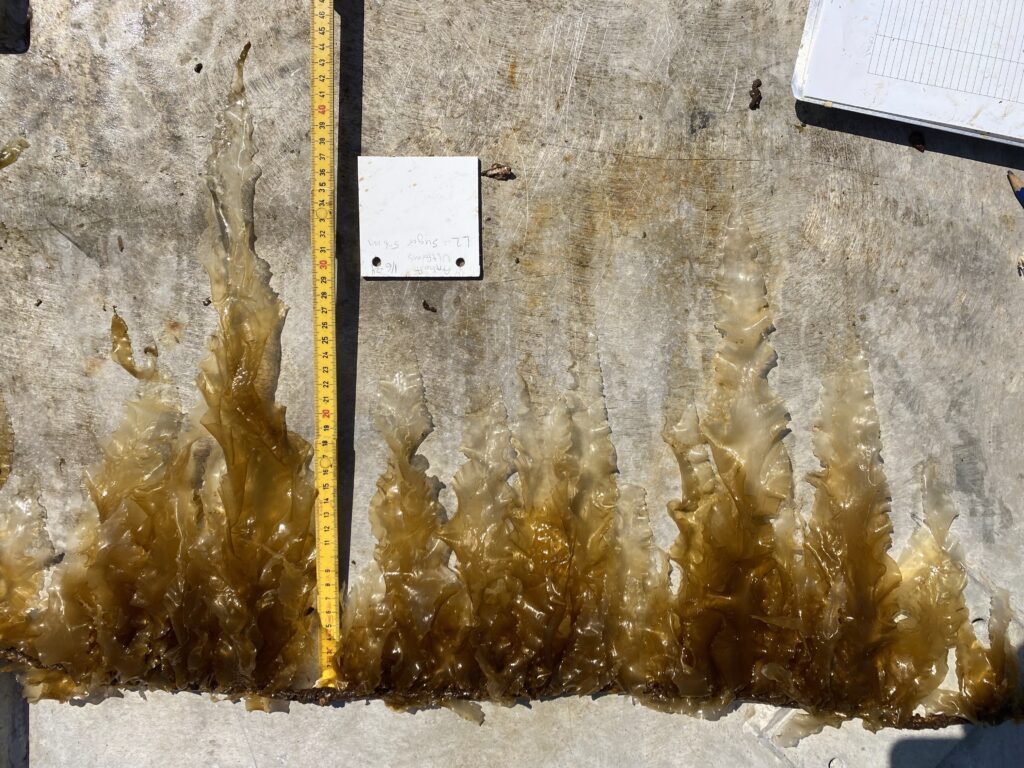
  • Nearshore at Kiel harbour, new seeding techniques and pre-cultivation enabled a large-scale sugar kelp installation and a successful harvest.
  • At Kiel, seeding by twine outperformed direct seeding on these lines, 657 grams fresh weight per metre compared with 77.5 grams, and the harvest totalled 211 kilograms of sugar kelp over a four month season.
  • At Kiel-Friedrichsort, pupils from a local school took part in monitoring and harvesting the seaweed, contributing real data to the project; this nearshore work was featured by Euronews in August 2025 and by NDR in March 2026.
  • Cooperation across projects at FINO2 helped overcome weather and ship limits, opening many more installation and maintenance trips.
  • Results feed a German expert study on offshore multi-use, and companies are building them into their business cases.
  • Camera monitoring at FINO2 and the Kiel fish hotel is also building a picture of marine life around the pilot: offshore cameras recorded the regionally threatened European eel, Atlantic cod and a wrasse species, while nearshore cameras logged more than 400 sightings of a stickleback species exploring the new habitat, though nest-building itself has not yet been confirmed.   
 

Planning an offshore project? Get in touch for consultancy on planning, licensing, logistics, monitoring and training.

Netherlands: Pilot 5, Borssele III

PILOT SITE RESULTS

  • In the pilot video, Dr Pauline Kamermans shares four years of findings: Wageningen Marine Research developed an ROV method to assess mussel coverage and biodiversity on the lines, with cameras for bird presence and an echosounder for fish.
  • Toxin analysis showed all levels below consumer thresholds, so the mussels grown on the platform are safe to eat, and biologically the area is suitable for mussel farming.
  • The food safety testing covered lead, cadmium, mercury, PAHs, dioxins, PCBs and PFAS, all within EU limits.
  • Strong currents from all directions at Borssele damaged the longlines, which broke in October 2025, so there was no harvest. Solving this technical problem is the main challenge.
  • A taste test and a pricing analysis by Wageningen researchers use mussels from the platform. Once the technical issues are solved, the site could be scaled up, pending an economic analysis.
  • As part of the Dutch pilot, biodegradable reef materials, oyster shell bags, reef paste modules and 3D reef structures, were installed at the nearby Voordelta site in June 2024, after permit restrictions ruled out placing them inside the Borssele wind farm itself. Oyster and mussel spat have since settled on them, a promising sign for restoring biogenic reefs in the North Sea.


Want to learn from the Borssele experience? Get in touch with Wageningen Research about mussel farming in offshore wind parks.

Belgium: Pilot 6, Belwind

PILOT SITE RESULTS

  • A new submersible seaweed system (SeaStrut SW-6) was validated in Ireland, survived storms Bert and Éowyn, and gave a high-quality harvest in 2025.
  • The winged kelp grown there reached up to 3 metres long, with yields of up to 1.5 kilograms per metre of substrate.
  • A nature-inclusive oyster restoration structure was deployed in June 2024 and recovered without divers in September, with all 34 plates intact.
  • The nature-inclusive oyster restoration structure illustrates the potential of offshore wind farms to contribute to habitat enhancement and ecosystem restoration within their boundaries. A separate oyster cultivation line at Belwind was damaged and moved nearshore, so cultivation and restoration now continue on different tracks at the site.
  • Weather, detached equipment and revised diving rules forced changes to the plan, so offshore structures must be designed to be recoverable as well as robust.
  • Oyster restoration is being scaled up in REEFCOVERY and BlueConnect, and a nearshore oyster farm continues in an inland lagoon.
  • At Belwind, VLIZ used acoustic monitoring to estimate mussel and oyster biomass through the water column without disturbing the crop: this is the method behind ULTFARMS’ Bivalve Biomass Quantification Tool (BBQA), one of the project’s four Key Exploitable Results. 


Get in touch to test, license or co-develop SeaStrut seaweed and shellfish technology, or to explore nature-inclusive oyster-reef restoration and offshore multi-use permitting.                                                                                         

For a deeper look at the results from each pilot site, watch our pilot site results video playlist.

EXPLORE THE PILOT SITES

Each pilot site has its own page on how it was designed, set up and run. Select a pin on the map to open it.

KEY FACTS ABOUT ULTFARMS PILOTS

Integration with offshore wind farms

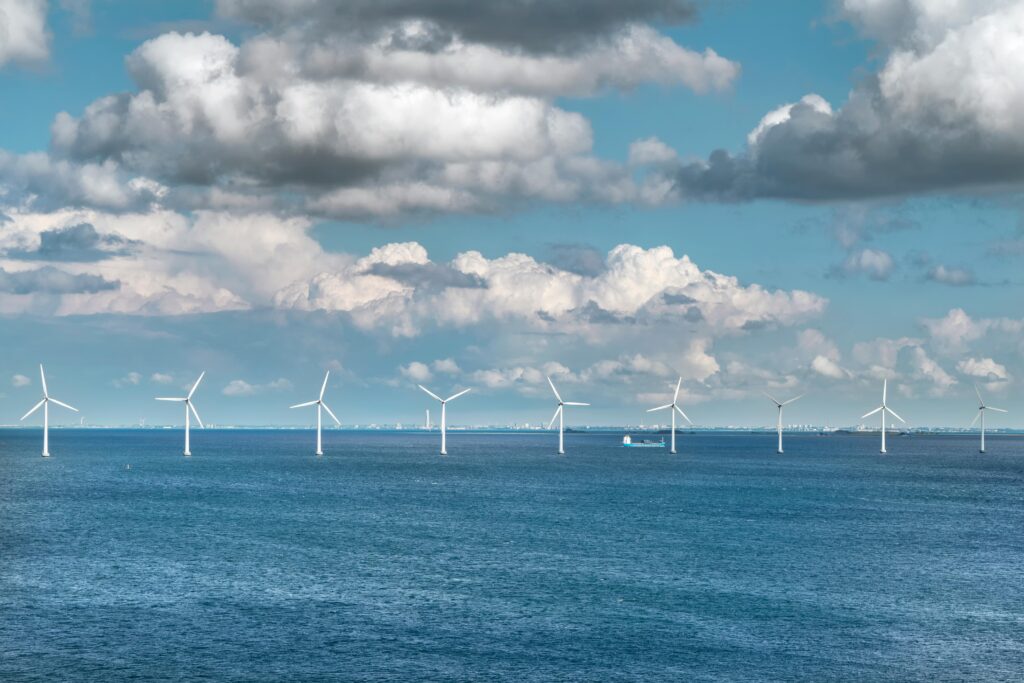
ULTFARMS developed six Low-Trophic Aquaculture Pilots (LTAPs) at offshore sites across the North and Baltic Seas: Belwind (Belgium), Borssele (the Netherlands), FINO2 and FINO3 (Germany), Anholt (Denmark) and Samsø (Denmark). The pilots covered the whole value chain for LTA production offshore and set out to optimise production in harsh offshore conditions and low-salinity environments, combining novel engineering, technical, ecological and biological approaches.

Complete value chain expertise

ULTFARMS brought together stakeholders from across the offshore wind and low-trophic aquaculture value chains, with the aim of producing environmentally sound, low-carbon and safe LTA products from design to commercialisation. The project worked on new cultivation structures, grow-out systems and eco-friendly design measures. It also drew on monitoring and management platforms such as the HiSea service platform, and on open databases and operational forecasting systems such as CMEMS and SeaDataNet, to support the planning and operation of the farms.

Enhanced monitoring and management platforms

Through ULTFARMS, the consortium set out to develop sustainable, innovative solutions for making better use of marine space and offshore wind farms. This work contributes to a circular economy, where waste is minimised, resources are used efficiently and economic growth is decoupled from environmental degradation. It also supports low-carbon, climate-resilient and environmentally sustainable aquaculture, in line with the EU’s ambition to become the first climate-neutral continent by 2050.

The Ocean Multi-Use Roadmap is Out!

Cover of the ULTFARMS Ocean Multi-Use Roadmap