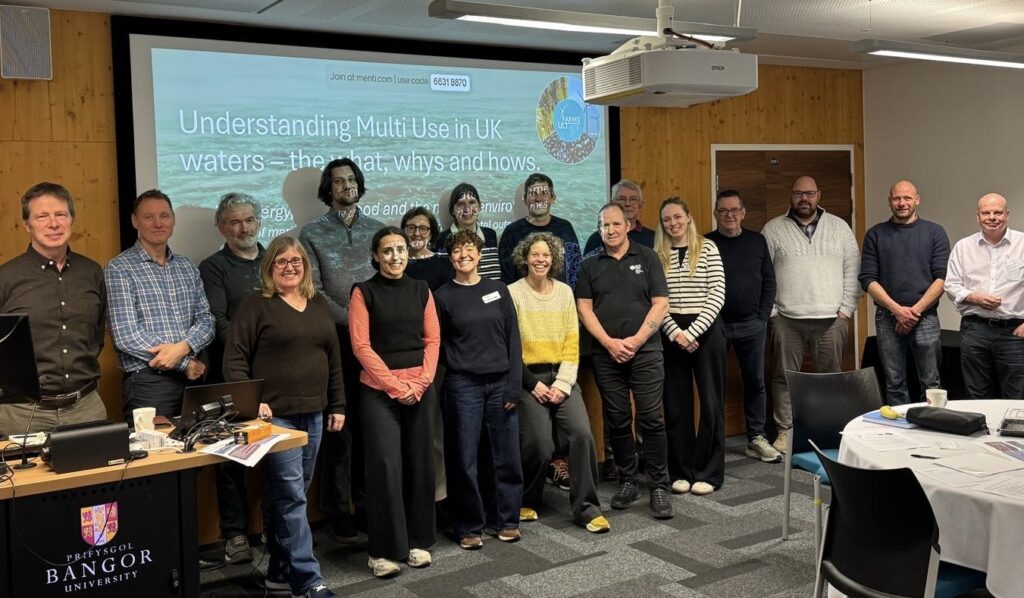
On Tuesday 10 February, the CoSaris Associate Region team — Julie Webb, James Wilson, and Shelagh Malham — in collaboration with the ULTFARMS project, co-hosted a workshop at Bangor University’s Marine Centre Wales in Menai Bridge, North Wales, UK. Titled “Understanding Multi-Use in UK Waters – what, whys and how’s”, the event brought together stakeholders from across the marine sector to explore multi-use in Welsh and wider UK marine planning.
Exploring Shared Marine Space
The workshop explored the intersection of marine energy and food systems, including fisheries and aquaculture, within the natural environment. A central question was:
Can different marine activities successfully co-locate within the same marine space in UK waters?
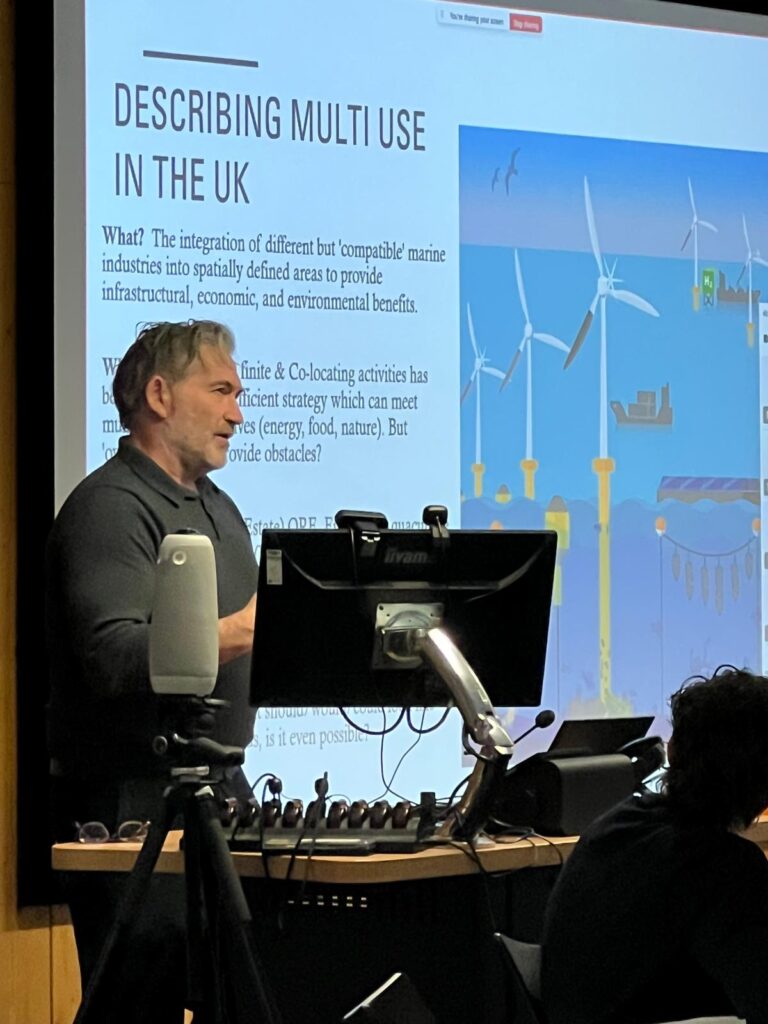
The morning session featured presentations from a wide range of organisations and perspectives, including representatives from ULTFARMS, the Welsh Government’s Marine and Biodiversity Division, DEFRA’s Marine Spatial Prioritisation Programme, The Crown Estate, Morlais, the National Federation of Fishermen’s Organisations (NFFO), and Offshore Shellfish Ltd.
Contributors explored the opportunities and challenges of multi-use, including how energy, aquaculture, fisheries, biodiversity, and coastal economies can coexist in increasingly busy marine spaces.
The afternoon moved into more informal discussions, allowing participants to engage directly with one another and reflect on the practical realities of shared marine space. Conversations highlighted that multi-use is not simply a planning concept, but a real-world challenge involving food security, energy transition, environmental stewardship, and the long-term sustainability of coastal communities.
The Value of In-Person Dialogue
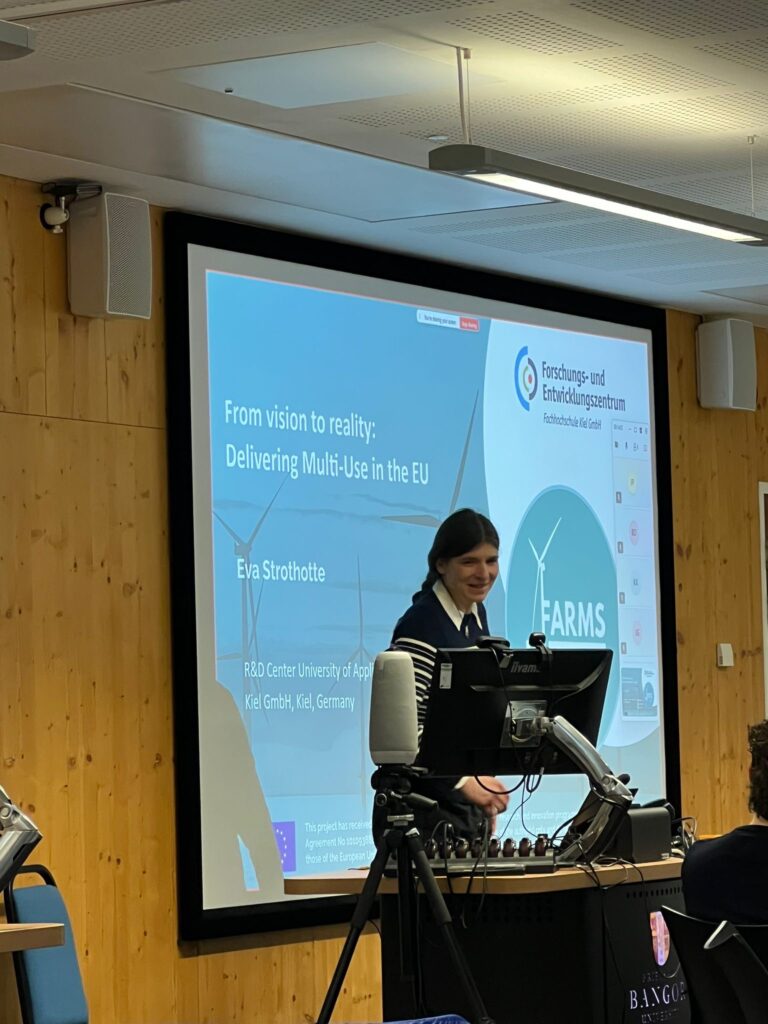
A strong theme that emerged from the workshop was the importance of bringing people together face-to-face. Participants emphasised the value of in-person exchange, noting how difficult it is to replicate such discussions virtually. The workshop successfully fostered open dialogue across sectors that rarely engage directly. ULTFARMS presentations provided practical examples of offshore wind and aquaculture co-location while helping build new connections.
Following the event, several attendees reached out to continue discussions, seek further insights, and explore potential cooperation opportunities, demonstrating strong interest and momentum around multi-use.
Insights for ULTFARMS and Associate Regions
A key takeaway was the significant knowledge gap around marine multi-use, particularly in Associate and non-EU regions. The workshop reinforced the importance of engaging directly with regional stakeholders and explaining not only the technical possibilities of co-location between offshore wind and low-trophic aquaculture, but also the broader social, environmental, and economic benefits that multi-use can offer.
Importantly, the event demonstrated how impactful in-person engagement can be when introducing these concepts. By creating space for dialogue and shared learning, workshops such as this help build understanding, trust, and collaboration between sectors that will need to work together in the future.
As marine space becomes more limited and demands grow, these conversations will be critical for shaping sustainable marine planning in the UK and beyond.
