Kiel Harbour, March Update: Successful Harvest of Our Saccharina latissima Installation
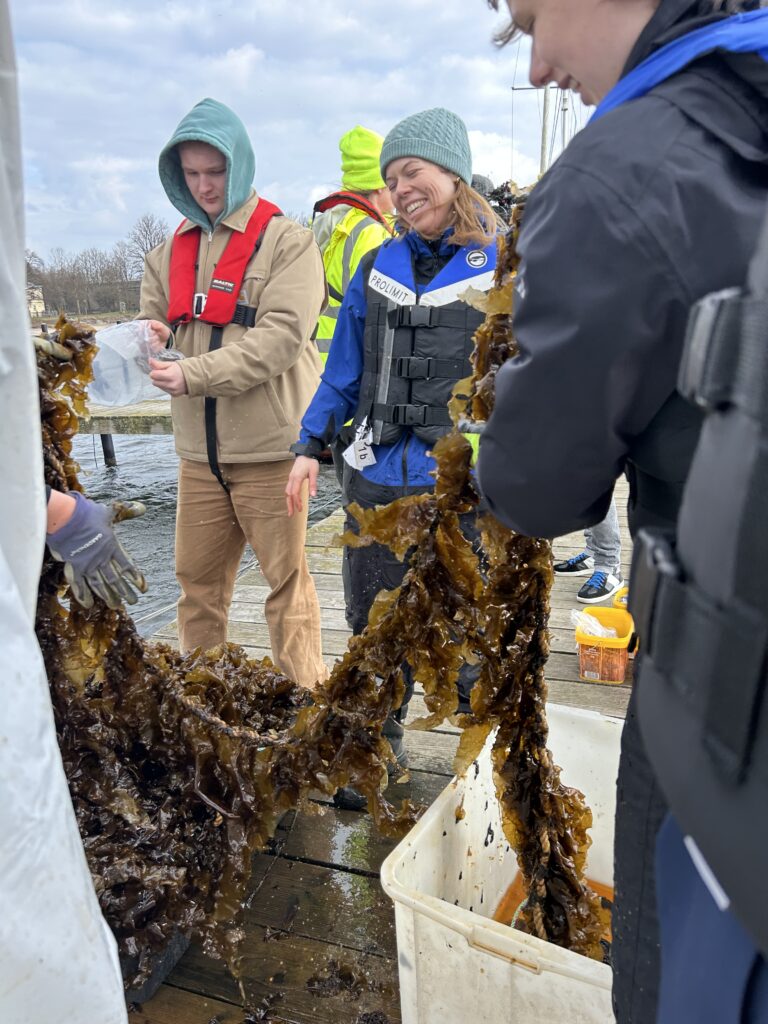
We are pleased to share the latest progress from our German nearshore pilot site: our partners at the Research & Development Centre Kiel GmbH (FuE) have successfully completed the largest nearshore harvest of the locally occurring sugar kelp (Saccharina latissima) to date.
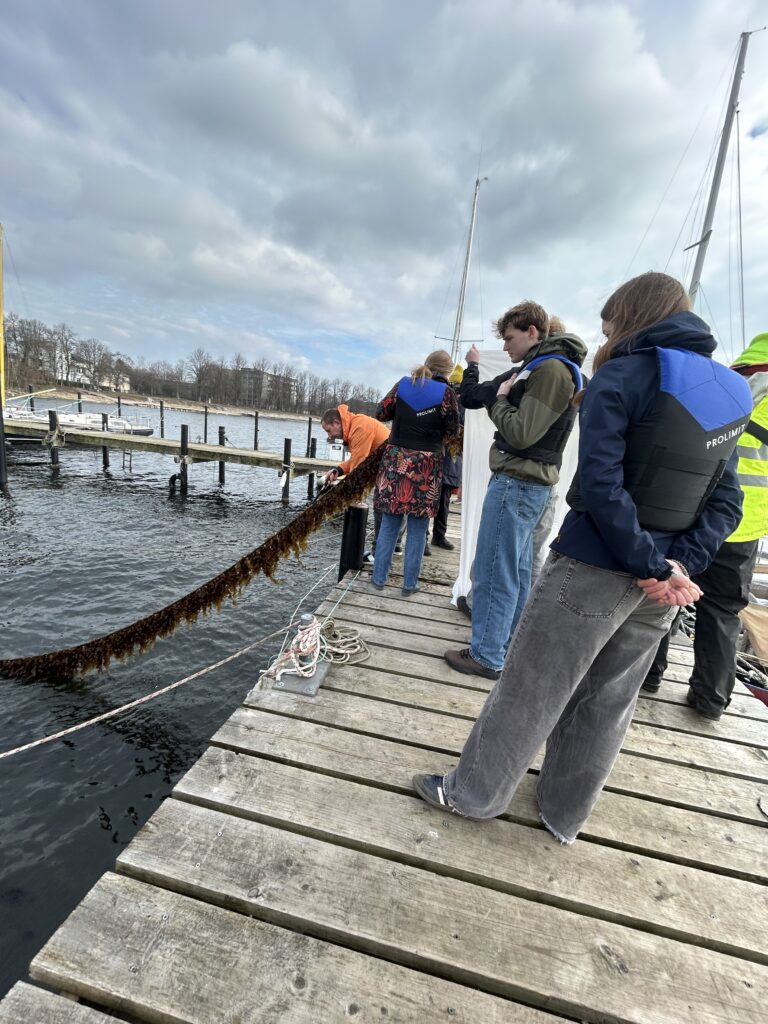
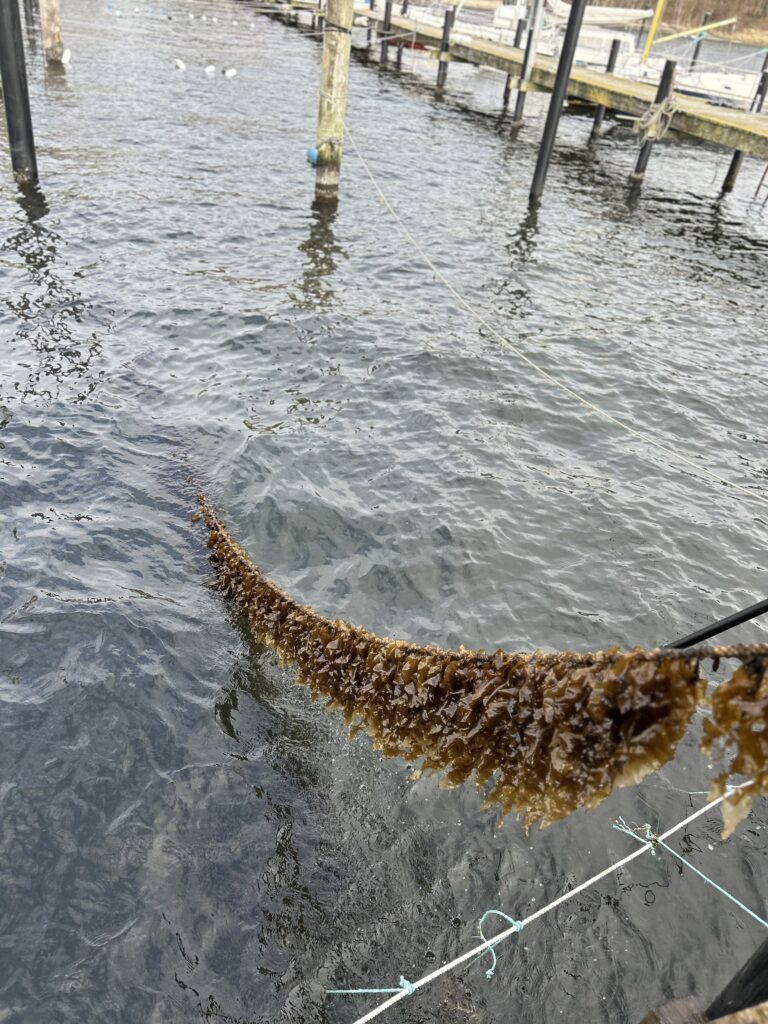
This accomplishment follows the redesign and adaptation of their macroalgae cultivation system earlier this season, which was deployed and later expanded to a total of sixteen longlines, together providing around 1.3 kilometers of growth substrate. This extensive setup mirrors the system development highlighted in our December update and marks a significant step forward in understanding sustainable seaweed cultivation under real costal conditions
Integrating Local Communities into Marine Innovation
One of the defining features of this pilot site is its location within the existing Kiel Harbour infrastructure – a deliberate choice by our partners to directly involve local communities. Fishers, boat owners and notably pupils from the nearby school Lernwerft have all contributed to this seasons’ cultivation and harvesting activities. Ther engagement continues to showcase how nearshore aquaculture can be integrated meaningfully with everyday maritime life while fostering awareness around sustainable marine resources.
Comparable Experiments Across Regions
This harvest is part of a larger coordinated research effort, in which similar Saccharina-based cultivation methodologies are being applied across multiple ULTFARMS test locations. By deploying comparable systems simultaneously, researchers can directly evaluate growth differences across regions and identify optimal strategies for scaling low-trophic aquaculture in Europe. This approach reflects the collaborative methodology described in previous updates from our German pilot.
From Harvest to Analysis
Following the harvest, most of the biomass is now being analysed for key growth parameters to further refine the cultivation model. In parallel, a portion of the kelp has been transported to a smokehouse to explore new recipes and value-added applications. The results of these culinary tests are eagerly anticipated and may open new pathways for sugar kelp utilisation within local and regional markets.
A big Thank You to our Partners
We extend our warmest thanks to Hortimare, whose guidance and seed material continue to support the success of the German pilot, and to FuE and the enthusiastic students of the Lernwerft for their hands-on contributions! Their combined efforts have made this large-scale growth experiment far more feasible and far more meaningful to the communities connected to Kiel Harbour.